
The Evolution of Color PPF: How Technology Surpassed Vinyl Wraps
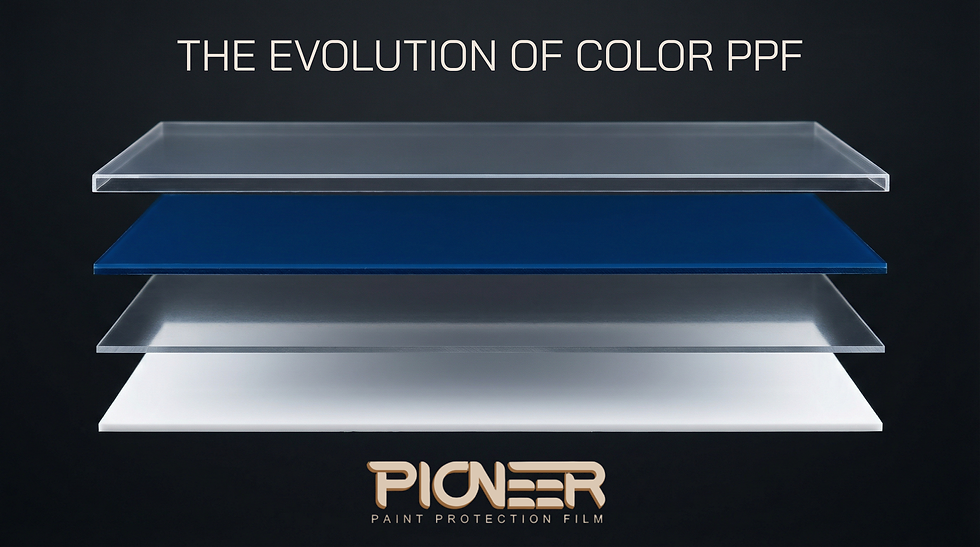
Color Paint Protection Film (Color PPF) is often misunderstood as a simple alternative to vinyl wraps. In reality, modern Color PPF represents a significant technological advancement—one that goes far beyond adding pigment to film.
For detailing shops and professional installers, understanding how Color PPF evolved is essential. The differences between early Color PPF, vinyl wraps, and today’s advanced systems directly affect installation stability, long-term durability, and after-sales risk—the very areas Pioneer’s Color PPF series was developed to address.
Early Color PPF: Borrowing Concepts from Vinyl
In the early stages, Color PPF development followed a similar logic to vinyl wraps—introducing color through dyes mixed directly into the adhesive layer of TPU-based films.
While this approach enabled early market entry, it introduced major risks:
Adhesive chemistry became unstable
Pigment additives interfered with bonding behavior
Long-term exposure to heat and UV accelerated degradation
These early failures shaped how manufacturers like Pioneer later approached Color PPF development—moving away from vinyl-inspired shortcuts toward purpose-built protection technology.
Second-Generation Color PPF: Partial Improvement, Persistent Risk
The next phase of Color PPF evolution separated pigment from adhesive, placing the color layer between the TPU and adhesive layers.
This design improved initial installation stability but continued to show weaknesses over extended service life, especially in hot climates and high-UV environments.
Many of the long-term issues Pioneer observed during market analysis—including adhesive fatigue and difficult removal—reinforced the need for full material isolation, not partial solutions.
Why Color PPF Is More Complex Than Vinyl Wraps
Unlike vinyl wraps, which are primarily cosmetic, Color PPF must deliver:
Visual transformation
Physical paint protection
Long-term adhesion stability
Clean removability
Each layer—adhesive, TPU, pigment—reacts differently to heat, UV, and chemicals. Without proper isolation, these interactions lead to premature aging.
This is why Pioneer’s Color PPF series was developed using a fundamentally different structure than vinyl and early Color PPF solutions.
Modern Color PPF Technology: Fully Isolated Layer Architecture
The most advanced Color PPF systems today adopt a fully isolated multi-layer structure:
Adhesive → TPU → Color Layer → TPU
Pioneer’s Color PPF series follows this latest-generation architecture, where:
Color is completely isolated from adhesive chemistry
TPU layers protect pigment from UV exposure and environmental stress
Adhesion remains stable over time
Removal is clean, with no residual contamination when properly installed
This structure represents the current benchmark for professional Color PPF performance.
Why Pioneer’s Color PPF Outperforms Vinyl in Long-Term Use
From an installer’s perspective, Pioneer’s Color PPF series offers clear advantages over traditional vinyl wraps:
Greater resistance to stone chips and abrasion
Superior UV stability and color retention
Stronger structural integrity under heat
Predictable, residue-free removal
While vinyl remains suitable for short-term cosmetic applications, Pioneer’s Color PPF is engineered for durability, protection, and long-term reliability—especially important for professional installations.
Pricing, Technology, and After-Sales Reality
Color PPF pricing varies widely across the market. In many cases, lower-priced Color PPF products still rely on first- or second-generation technologies similar to vinyl-based solutions.
Pioneer’s Color PPF series reflects a different philosophy:prioritizing long-term stability and after-sales reliability over short-term cost reduction.
For installers, this means fewer warranty issues, reduced rework, and greater confidence when offering Color PPF to customers.
Choosing Color PPF with a Professional Mindset
For detailing shops, selecting Color PPF should involve evaluating:
Layer architecture
Adhesive stability
Removal behavior
Manufacturer support and warranty systems
Pioneer’s Color PPF series was developed with these exact criteria in mind—supporting installers with a solution designed for real-world conditions, not just showroom appeal.


Comments